
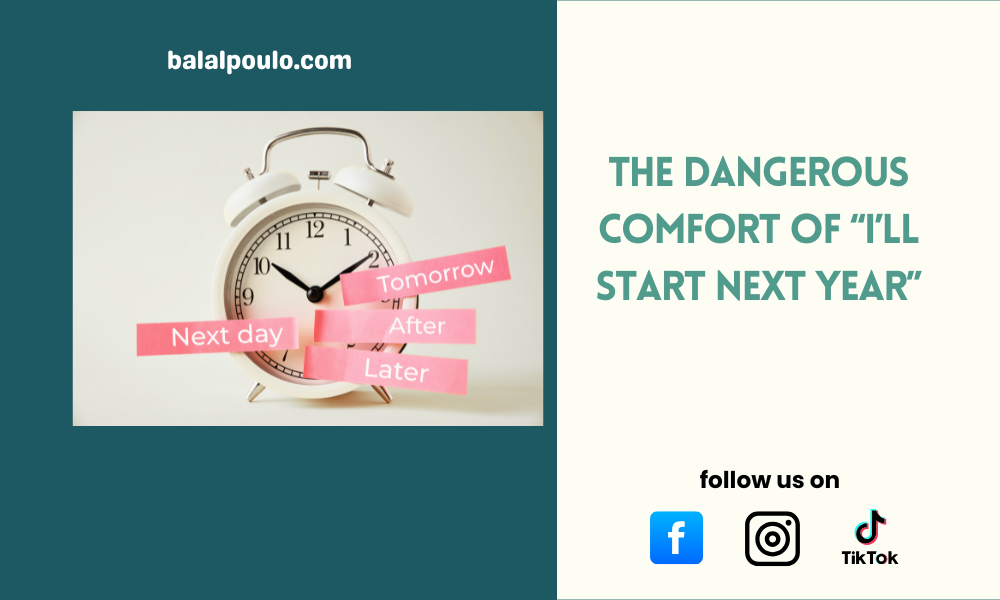
For years, I told myself I’d finally take control of my finances and get serious about my finances. Not today. Not this month. But next year. What I learned anout delaying saving and investing.
It felt responsible. Thoughtful, even. I convinced myself I needed more time, more money, more clarity, a better plan to take control of my finances. Starting later felt safer than starting messy.
You’ve probably told yourself something similar.
“I’ll start saving when things settle down.”
“I’ll invest when I make a little more.”
“I’ll get serious next year.”
It sounds harmless. But that sentence carries a quiet cost.
When “Later” Becomes a Pattern
For years, I postponed investing. I worked hard. I earned money. I paid my bills. And every time I thought about saving or investing, I told myself I’d start when the timing was better.
Sometimes I told myseff next month. and the month arrived and again I told myself next year, or when things felt more stable. But stability never really comes when you’re waiting for it.
Life keeps moving. Expenses show up. Priorities shift. And before you realize it, time has passed, but your situation hasn’t improved the way you expected.
I didn’t notice how much that delay was costing me until something forced me to.
The Moment That Changed Everything
At one point, I had an opportunity to move to a new city for a better job.
It should have felt like progress. But when it came time to make the move, pay for the deposit, the rent, the basics, I didn’t have the money.
I had to borrow. That moment stayed with me. Not because borrowing is uncommon, but because I knew I had been working for years. I had income. I had effort.
What I didn’t have was preparation. And that’s when it became clear to me: the problem wasn’t that I didn’t earn enough. The problem was that I kept delaying the habits that would have protected me.
Why “I’ll Start Next Year” Feels So Good
There’s something comforting about postponing. It removes pressure, it lets you feel like you have a plan. Also, it gives you permission to stay where you are just a little longer.
But remember that comfort is misleading. Because every time you delay starting, you’re not just postponing action, you’re postponing progress. And progress is built through time. The earlier you start, the more time works in your favor.
In the other hand, the longer you wait, the harder it becomes to catch up. So stop waiting and start taking back control of your life. Because the earlier you start the faster you start noticing progress in your life and
What Starting Earlier Really Looks Like
Most people think they need a perfect plan or a large amount of money to begin.
You don’t. You need consistency. Imagine setting aside just $100 a month.
It doesn’t feel like much. It won’t change your life overnight. But over time, it builds something powerful. It helps you build discipline and consistency.
At a steady return over the years, that small amount can grow into thousands, then tens of thousands. Not because the amount was large, but because the habit was consistent.
Now imagine that same habit started earlier. Time does most of the heavy lifting.
If you are still waiting about taking control of your finances here is What to Do Instead of Waiting. If you’ve been telling yourself you’ll start later, here’s a simpler approach.
Start small.
Start imperfect.
Start now.
You don’t need to change everything at once. You can begin with a few simple steps:
1. Set aside a fixed amount every month
Even $50 or $100 is enough to build the habit. The amount you start does not matter much when it comes to taking control of your finances, what matter is the habit and discipline you build along the journey.
2. Automate your savings or investing
Remove the need to decide every month. Let the system do the work. This one habit helped me reach Coast Fire in 7 years and now I am working toward Financial Independence before 50.
3. Focus on consistency, not performance
Don’t worry about getting everything right. Worry about showing up regularly.
4. Learn as you go
You don’t need to know everything before you begin. You’ll understand more as you take action.
The goal is not perfection. It is the momentum you build as you progress.
The Shift That Changes Everything About your Finances and Life.
Once you start, something changes. You stop thinking about money only in the present.
You start thinking about your future. You move from reacting to life… to preparing for it. And over time, that shift creates stability. Not overnight. Not dramatically.
But quietly and steadily. If you are still wondering whether small progress has a big impact in your life, here a simple question to reflect on
If nothing changes, where will you be one year from now? And if you started today,even with a small step, how different could that look?
Because the truth is: You don’t need next year to begin. You just need today.
If this message resonates with you, take one small action before the day ends.
Set up a savings transfer.
Open an investment account.
Put aside your first $50 or whatever amount you can afford. Remember, it doesn’t have to a large amount or to be perfect. It just has to begin.
That’s all for this week.

